Post Icon

Ford shows eWheelDrive Fiesta

 Electric Ford Fiesta eWheelDrive showcases in-wheel hub electric motors

This is the Ford Fiesta eWheelDrive. It’s been built by Ford and specialist German firm Schaeffler as “a driveable research vehicle that could lead to improvements in urban mobility and parking by making possible smaller, more agile cars.”


The eWheelDrive Fiesta has two electric motors, one in each of the rear wheels.

The Fiesta’s batteries are housed under the bonnet, but the idea in future is that by placing the batteries under the car’s floor, and having the power units within the wheel hubs, the car no longer requires space under the bonnet.

A future model could therefore be the size of a current two-seater car, but still have four seats.

What’s more, the eWheelDrive steering system designs could enable vehicles to move sideways into parking spaces.

Talking about the project, Pim van der Jagt, Ford’s director of Research and Advanced Engineering in Europe, said:

“This is an exciting project to work on with Schaeffler because it potentially opens new options for the development of zero emission vehicles with very efficient packaging and exceptional manoeuvrability.”

The project was initiated by Schaeffler, with Ford joining later, as a response to statistics which project that the number of cars will increase four-fold by 2050, and the number of people living in the world’s cities will jump from 3.4 billion to 6.4 billion in the same time frame.

Ford will partner with Schaeffler, Continental, RWTH Aachen and the University of Applied Sciences, Regensburg, on project MEHREN (Multimotor Electric Vehicle with Highest Room and Energy Efficiency) to develop two new driveable vehicles by 2015.

The project aims to increase the integration of in-wheel motors in a car and will look at “vehicle dynamics control, braking, stability and the fun-to-drive factor.”

For an alternative review of the latest Ford Fiesta Hatchback visit our sister site carbuyer.co.uk

 
Read More ... Résuméabuiyad

  • Digg
  • Del.icio.us
  • StumbleUpon
  • Reddit
  • RSS
Post Icon

Renault Captur

We get behind the wheel of the new Renault Captur. Can it match the Nissan Juke for desirability?


Lots of crossovers have tried to recreate the formula of the big-selling Nissan Juke, but the Renault Captur – set to hit dealers in June – comes closest The two cars share the same platform and both feature eye-catching styling, but does the Captur have that desirability that sets the Juke apart from every other model in this class?

It doesn’t take long to realise that fun has been traded for a comfortable, forgettable drive. You sit up high – 100mm higher than a Clio – which gives you a decent view of the road, although the slicked-back A-pillars can get in the way at junctions. The steering is light and fairly direct, but doesn’t really tell you much about what the nose is doing. Grip is reasonable – the Captur is front-wheel-drive only – and the brakes do a decent job of slowing the car, which weighs around 100kg more than the current Clio.

The 1.5-litre diesel is pretty smooth, although can be a bit noisy at higher revs and on a trailing throttle on the motorway. But while it delivers some spectacular claimed fuel economy figures, it’s no performer and struggles a little, particularly if you’re driving a hilly route or carrying lots of heavy stuff. The five-speed gearbox is lovely and slick, but the ratios are quite long and take some getting used to – most notably with the lack of engine braking when descending a steep hill.

The suspension set-up has been tuned for comfort, too, so bodyroll in the bends is fairly pronounced. However, while the Captur can jiggle around over smaller bumps – particularly when fitted with 17-inch wheels - it settles down nicely on the motorway. It’s a quiet cruiser, too, helped by standard-fit cruise control on all models.

But while it might not be the most engaging drive, the Captur has other talents. For a start, there’s the way it looks. While the Juke’s styling is pretty polarising, Renault’s latest design language seriously suits its new crossover.

Like the Clio, it features a large, upright Renault badge on its nose, swept-back rather feline headlights and neat gloss trim around the foglights on our top-spec test car. If you can stretch to it, we’d recommend the £300 extra it costs to get the two-tone roof, which gives the Captur an extra classy edge.
Renault Captur dimensions

As the Captur effectively replaces the Modus, it features a number of MPV-inspired touches to the interior, including stacks of storage in the doors and on the dash, a solidly-built dashboard, and a sliding rear seat bench. In its rearmost position, you get lots of head and legroom, as well as a 377-litre boot. Slide it 160mm forward and you get just enough space for an adult to take a short trip in the back, but boot space jumps to 455 litres. The seat backs fold 60-40, but don’t go fully flat. The boot floor has two levels, and the divider is plastic on one side, making transporting muddy boots easy.

The Captur also features Renault’s patented removable seat covers. The base and back seat faces zip off easily and can be machine washed at 30 degrees, freshening up the cabin. You can change them when it comes time to sell, too.


Read More ... Résuméabuiyad

  • Digg
  • Del.icio.us
  • StumbleUpon
  • Reddit
  • RSS
Post Icon

Skoda Fabia Monte Carlo Tech announced

 The Skoda Fabia Monte Carlo Tech edition is limited to only 1,000 cars

This is the Skoda Fabia Monte Carlo Tech, a limited edition version of the Fabia Monte Carlo that adds sat-nav and Bluetooth – normally an £875 option – for no extra cost.

Limited to 1,000 cars in the UK, and on-sale now, there are two engine choices available, with 500 each of the 104bhp 1.2-litre TSI petrol model and 104bhp 1.6-litre TDI diesel being offered.

Prices for the Fabia Monte Carlo Tech start at £11,990 for the petrol model, and £12,960 for the diesel. Each car is available in a choice of two colour combinations – red with a contrasting black roof, or white with a black roof – and both come with five-speed manual gearboxes.

All Monte Carlo Tech models include piano black body trim on the exterior, black covers on the door mirrors, a black radiator grille, smoked headlights and 17-inch black alloys.

Inside, in addition to the Amundsen satellite navigation system, there are black sports seats, which feature bigger side bolsters, a black roof lining a leather-wrapped steering wheel with red stitching, and a leather-covered handbrake and gearstick gaiter. Silver door sill guards and metal pedals complete the look.

The original Skoda Fabia Monte Carlo was launched in January 2011 to celebrate 100 years of the Monte Carlo rally. The anniversary also tied in with Skoda’s 110th anniversary of competing in motor sport.

Skoda UK claims that the Fabia Monte Carlo model has been a success for the firm, with more than 4,000 sold since the car went on sale.
Read More ... Résuméabuiyad

  • Digg
  • Del.icio.us
  • StumbleUpon
  • Reddit
  • RSS
Post Icon

BMW X4 Concept

= Official pictures and details of the BMW Concept X4, ahead of its debut at the Shanghai Motor Show

We already know BMW is planning to plug the gaps in its standard line-up with the 2 Series and 4 Series. Now it’s turning its attention to its X models as it introduces the Concept X4 at the Shanghai Motor Show later this month.

This previews a production car set to be unveiled early next year – just as BMW introduced the 4 Series Coupe Concept at the start of this year, with the production model set for release at September’s Frankfurt Motor Show. Tone down the lights, wheels and bumpers, and the idea is you’re looking at a showroom-ready car.

There’s a clear design link between the 4 Series Coupe Concept and the X3, with both featuring a fresh LED headlamp pattern that flows straight into the grille. The shape of the lights is a little more angular than the curvy units fitted to the 4 Series.

In profile, the X4 has the same low-slung, high-riding silhouette as the X6. There’s a rising feature line running back from the front wing, joined by another which curves up around the rear wheelarches. The chunky wheelarches are almost squared off – a trick Jeep uses to make its cars look more muscular.

As with other BMW X models, matt black plastic cladding surrounds the wheelarches and runs along the side skirts.

From head-on, BMW has marked out the X4 as one of its coupés by making the outer air intakes a lot more pronounced than the central intake.

Move to the rear, and the car looks a bit like the new 3 Series GT. The bumper is a lot deeper, though, and features some rugged underbody protection and two large exhaust pipes.

BMW has altered the dimensions of the X3 to help create a more dynamic look for the X4. It’s exactly the same length, at 4,648mm, and has the same 2,810mm wheelbase, but it’s 53mm lower and 34mm wider. This gives a similarly planted look to the X6.

That extra width could be added to the track of the X4 – as it is in the X6 – which could help make it feel a little more stable through corners. Add the lower roofline and lower centre of gravity, and the X4 looks set to be one of the best-handling SUVs in the BMW line-up.

No pictures of the interior have been released yet, but BMW will probably keep the layout near-identical to the X3’s, as it has done with the X6, in an effort to minimise development costs. Due to the sloping roofline, there’ll be a little less headroom and a smaller boot – so while the X3 has a 550-litre load area, the X4 will probably have around 500 litres of space.

BMW hasn’t provided any details about engines or transmissions – only that the X4 will come with the xDrive four-wheel-drive system.

The car will probably share engines with the X3, as the X6 shares X5 engines. That means a 181bhp 2.0-litre diesel in the X4 20d, a 254bhp 3.0-litre straight-six in the X4 30d and a flagship using the same engine but producing 309bhp.

BMW does offer a rear-wheel-drive version of the X3, but hasn’t confirmed whether a 2WD X4 will be available.

The company will be hoping to continue the success story started by the X6, which has consistently sold well since it was introduced in 2008. For every two-and-a-half X5s that found homes globally last year, BMW sold one X6. Similar sales figures for the X4 are likely.

The car will be built alongside the X3, X5 and X6 at the Spartanburg plant in South Carolina, US. Prices are expected to start at around £30,000 when order books for the X4 open early next year.

Read More ... Résuméabuiyad

  • Digg
  • Del.icio.us
  • StumbleUpon
  • Reddit
  • RSS
Post Icon

2014 Acura RLX, a techno remix of the original hit: Motoramic Drives

Jimmy Durante was born of humble circumstances on Manhattan’s Lower East Side in the dark days of the 1890s, but went on to become one of the most well-respected and highest grossing stars of the Jazz era. Yet however great was his regard, when he was eventually enshrined in pop music by Cole Porter with “You’re the Top,” Durante was memorialized solely for his signature sniffer. To quote: You’re a rose/You’re Inferno’s Dante/You’re the nose/On the great Durante.

Similarly, though it began as the offspring of workaday Japanese automaker Honda in the dark days of the 1980s, Acura went on to become one of the most well respected and best-selling car brands of the post-Malaise era, producing immortal and beloved hits like the Integra, the first generation Legend, and the original TSX. Yet when reviewers write about the brand today, they’re always certain to lead with a reference to the straked and argent beak Acura designers stuck on their models in the late aughts. To quote: You’re an axe/You’re Charles Barkley’s razor/You’re a shield/That could block Spock’s phaser.

This snooty reaction isn’t limited to the snoot. Neither is it solely the fault of the AutoCAD wielders in Tokyo and Torrance, Calif. Somewhere along the way, just as Durante lost his radio mojo to TV, Acura lost its keel to complacency, crossover dependency, the rear-wheel drive revival and an institutional sight-lowering that Honda once fought with innovations like CVCC instead of caving to catalytic converters, but has grown to accept in this century.

Which brings us to the brand’s new flagship, which, despite Acura’s marketing tagline for it — "Luxury Defined by You" — is not called the UL, but rather RLX. As in, Frankie say.

Sit down in its cushy captain’s chair, start up the actively noise-cancelled engine, roll up the insulating laminated windows, and begin coasting along on resonator-equipped frequency-reducing wheels, and you’ll see what we mean. As if there were any doubts about the car’s intent, at the launch, an Acura executive described it as providing the kind of “relaxed driving situation” wherein one could pilot it with one hand lightly touching the wheel, making it an ideal competitor for that 1978 Lincoln you were cross-shopping.

The new RLX is actually slightly sportier than that, with an iVTEC V-6 that's smaller but more potent than the powerplant it replaces. The downsized 3.5 liter unit’s 10 hp bump to 310 hp is accomplished through Acura’s first use of direct injection, and when combined with a 76-lb steelectomy, should translate to slightly better acceleration than the old RL. Fuel economy rises as it must, from 17/24 mpg in the RL to 20/31 mpg. So to does the acronym count, with the requisite collision, lane departure, lane keeping, adaptive cruise, and low-speed following systems, all of which work appropriately well if you turn them on, which we mostly didn’t because, well, we’re generally in favor of being the ones to drive the cars when we’re driving them.
 
 The most relevant acronym here though is PAWS, which stands not for Prow All Wreathed in Silver (sorry), but Precision All Wheel Steering, a trick system that uses a pair of electronic actuators to provide unique toe-in or toe-out angles to each rear wheel. If this sounds like something Honda might have invented in the '80s, it is, kind of. But it’s much more sophisticated and computerized and magical than the four-wheel-steering setup on the 3rd-generation Prelude. In a wet slaloming comparison with a Mercedes E-Class and BMW 5-Series, we found PAWS to be seamless yet evident, providing the RLX with a more balanced feel than one would expect of a cushy, nose-heavy front driver.
Speaking of heavy noses, the Acura still suffers from the aforementioned familial endowment, though its prominence has been dissipated by the distracting presence of its new Signature Jewel Eye headlights. These definitely look …distinctive, though the unique toe-in and toe-out angles applied to each of the lamp’s five sets of LED nodules give them the appearance of a pair of stacked engagement rings lumpily crafted by Jared after a few trips to the champagne fountain.
Our own engagement with the RLX over a variety of roadkill-littered Northern California roads was sadly similar: gemlike, yet misaligned. The cabin is finely crafted, with clean lines and smart materials, and hosts a surprisingly roomy rear bench — the result of a two-inch wheelbase stretch back there. But the space feels '90s austere, lacking the flourishes of color and handcrafted richness one now expects in the category. The dual LCD screens—the lower one controlling ventilation and media, the upper dedicated to the nav and multifarious AcuraLink features that this car’s aging buyers will never use — nicely split functions you’d want to access simultaneously, but are no more user-friendly or less distracting than they’d be on one screen. (Whom do we have to bribe to get some knurled knobs up in here?) And the 6-speed automatic transmission couples well with the engine, but lacks the bandwith, sharpness, and efficiency of the 7- and 8-speeds in its competitors

Overall, we kept thinking: this is a very nice car. But at $60,450 for the fully equipped models we were driving, we had to ask, is it twice as nice as Honda’s lovely $30,000 Accord V-6, or once as nice as a similarly kitted-out Audi A6? The answer was always no.
Perhaps our minds will be changed by the addition of 60 hp and two more drive wheels when the range-topping Super Handling All Wheel Drive version arrives later this year. We hope so. With the enticing NSX 2.0 Concept it just displayed at Detroit, Acura has shown that it can sniff out its moxie, so it’s not impossible to imagine the brand blowing past its current limitations. It worked for the Schnozolla. As no less than Frank Sinatra sang in his 1955 revision to Burton Lane’s “How About You?” I’m mad about good books/Can’t get my fill/And James Durante’s looks/Give me a thrill. Thrill us, Acura. Please.

Read More ... Résuméabuiyad

  • Digg
  • Del.icio.us
  • StumbleUpon
  • Reddit
  • RSS
Post Icon

The 2014 Jeep Grand Cherokee, man card included: Motoramic Drives

hen the current generation of the Jeep Grand Cherokee launched in 2010, the original press materials made reference to the car’s “Mercedes heritage.” An annoyed letter from Europe quickly iced that phrase, but while the statement may have been questionable from a trademark standpoint, it was certainly true from a technical one. When Daimler sold its Chrysler holdings, the Grand Cherokee was well into development.

So with the 2014 model, which celebrated its first drive last week in Austin, you now have an American brand, owned by an Italian corporation, which features residual German styling and engineering. Even in the contemporary car business, where nameplates change ownership more often than minor-league baseball teams do, that’s some significantly muddled DNA. Six years later, the GC is still supported by the same suspension and air suspension as the M Class. It’s a secret Mercedes.

But just like with human genetics, all that mixing actually makes the product better.

The Grand Cherokee delivers solid on-road performance, top-notch offroad capability, unspectacular but solid exterior styling, and a reasonable amount of comfort. Little about it feels cheap or out-of-place. However, it’s hard to present a complete summary judgment, because like a lot of contemporary vehicles, the Grand Cherokee comes with so many different packages, engines, and trim levels, that it’s actually several cars in one. Jeep even offers three different four-wheel drive systems.

At the very base, the “Laredo” trim with 4X2 capability and a V-6 engine sells for $28,975, putting it in the same league as higher end Subarus and Mazdas. All the way up the scale, the fully-tricked-out “Summit” version, with a V-8 and four-wheel drive goes for $50,995, which means it’s competing with low-end Range Rovers. Starting in the second quarter of the year, Jeep will be offering a 3.0-liter EcoDiesel V-6 engine, which would add between $4,500 to $5,000 to the price and making it even harder to pin down. You could drive a dozen Grand Cherokees and not get the exact same car twice.


Read More ... Résuméabuiyad

  • Digg
  • Del.icio.us
  • StumbleUpon
  • Reddit
  • RSS
Post Icon

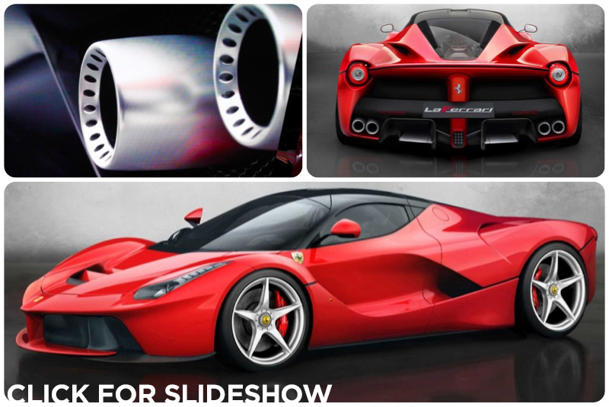
LaFerrari: The fastest Ferrari road car ever comes with just one name


After months of anticipation, Ferrari’s replacement to the legendary Enzo supercar was unveiled today at the Geneva International Motor Show. It’s called LaFerrari; it’s Ferrari's first hybrid, and the fastest road car ever built under the Prancing Stallion logo.
The name of Ferrari’s new flagship has been under question for sometime. Many expected it to be called the F70, and then it was rumored to be the F150 (highly amusing for us in America). The name LaFerrari however, is even worse — hearkening back to the Dodge La Femme of 1956 —  but this is Ferrari. It can, and will, do whatever it likes.
When the sheets were removed, the Ferrari stand at Geneva erupted into cheers, clapping, and rather a lot of pushing and shoving. And for good reason, too. LaFerrari is simply beautiful. In fact, it looks better than expected, as it presents sleek, swooping lines, and limits the aggressive edge of the Enzo. That ferociousness is still present at the front with its massive hood vents and sharp chin, but it blends elegance and speed in a wondrous fashion. The interior looks as breathtaking and futuristic as you would expect as well, with its digital display cluster and Alcantara wrapped surfaces.
Beneath the skin, LaFerrari does not disappoint. A V-12 motor punches out 800 hp, but when you add the 163 additional hp provided by the coupled electric motor, a grand total of 963 raging ponies are unleashed, comfortably outdoing the 903 hp produced by LaFerrari’s arch nemesis, the McLaren P1.

Read More ... Résuméabuiyad

  • Digg
  • Del.icio.us
  • StumbleUpon
  • Reddit
  • RSS